The Real Effects Of Bad Posture.
How Posture and Muscle Imbalances Affect the Entire Body
Poor posture is far more than a cosmetic issue. Over time, repetitive daily habits such as sitting at a desk, looking down at phones, driving, or reduced physical activity can create predictable patterns of muscle imbalance throughout the body. Two of the most common patterns seen in modern lifestyles are known as Upper Cross Syndrome and Lower Cross Syndrome. These conditions can contribute to chronic pain, headaches, nerve irritation, muscle tension, reduced mobility, and long-term spinal stress.
Upper Cross Syndrome primarily affects the neck, shoulders, and upper back, while Lower Cross Syndrome involves the pelvis, hips, core, and lower back. Although they occur in different regions of the body, both conditions develop in a similar way: some muscles become chronically tight and overactive while others become weak and underactive. This imbalance changes the way the body moves, stabilizes, and supports itself.
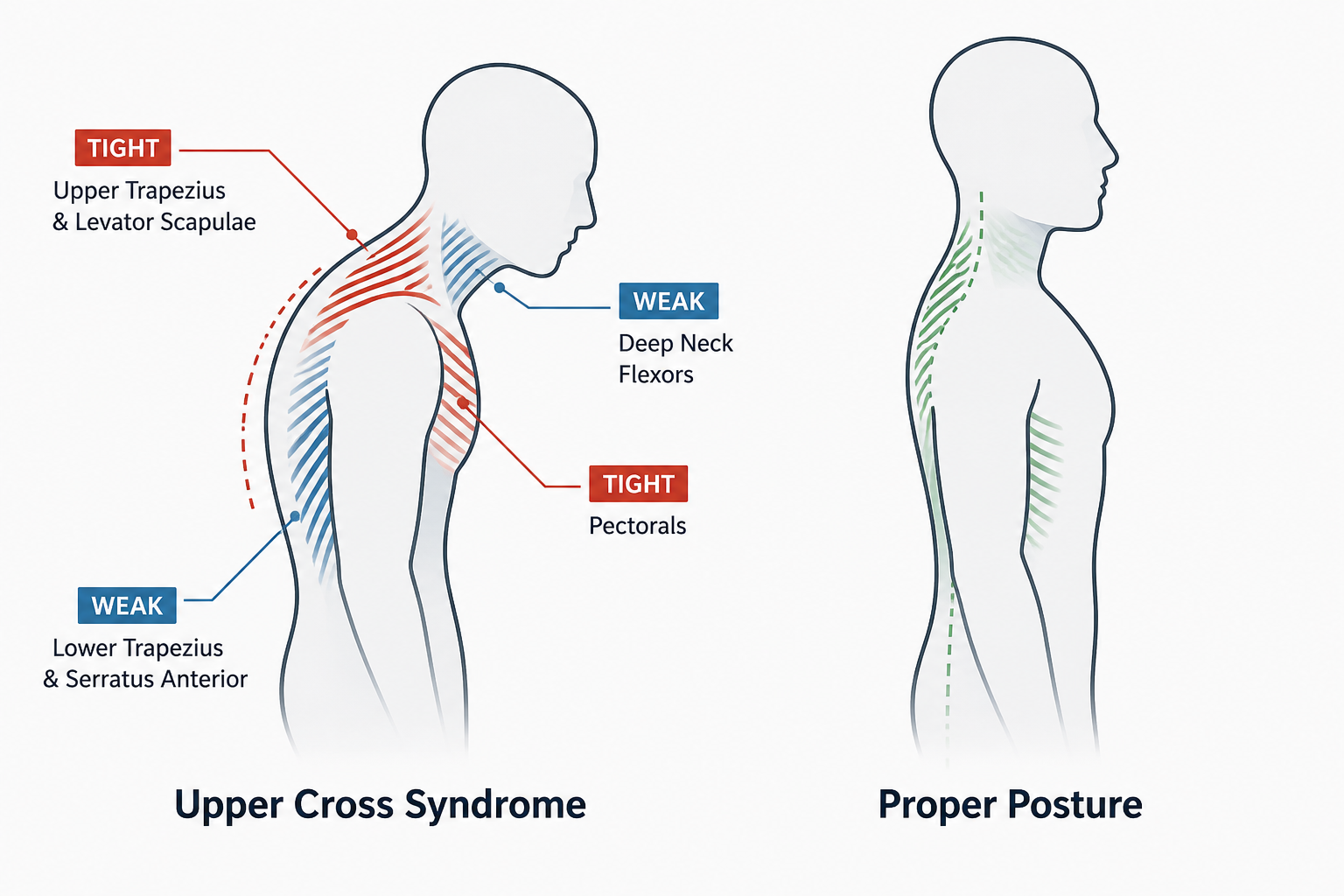
Upper Cross Syndrome
Upper Cross Syndrome is a common postural imbalance caused by prolonged sitting, computer use, and looking down at phones. Over time, the head shifts forward and the shoulders round inward, placing excessive stress on the neck and upper back.
As posture worsens, muscles such as the upper trapezius, levator scapulae, chest muscles, and suboccipitals become tight and overactive. At the same time, important stabilizing muscles including the deep neck flexors, rhomboids, lower trapezius, and serratus anterior weaken and become underactive.
This imbalance may lead to neck pain, tension headaches, migraines, shoulder tightness, reduced mobility, numbness or tingling into the arms, and burning pain between the shoulder blades. Forward head posture can also increase stress on the cervical spine and surrounding nerves, contributing to chronic irritation and degeneration over time.
Correcting Upper Cross Syndrome focuses on improving posture, restoring mobility, stretching tight muscles, and strengthening weakened stabilizers to help reduce strain on the spine and improve long-term function.
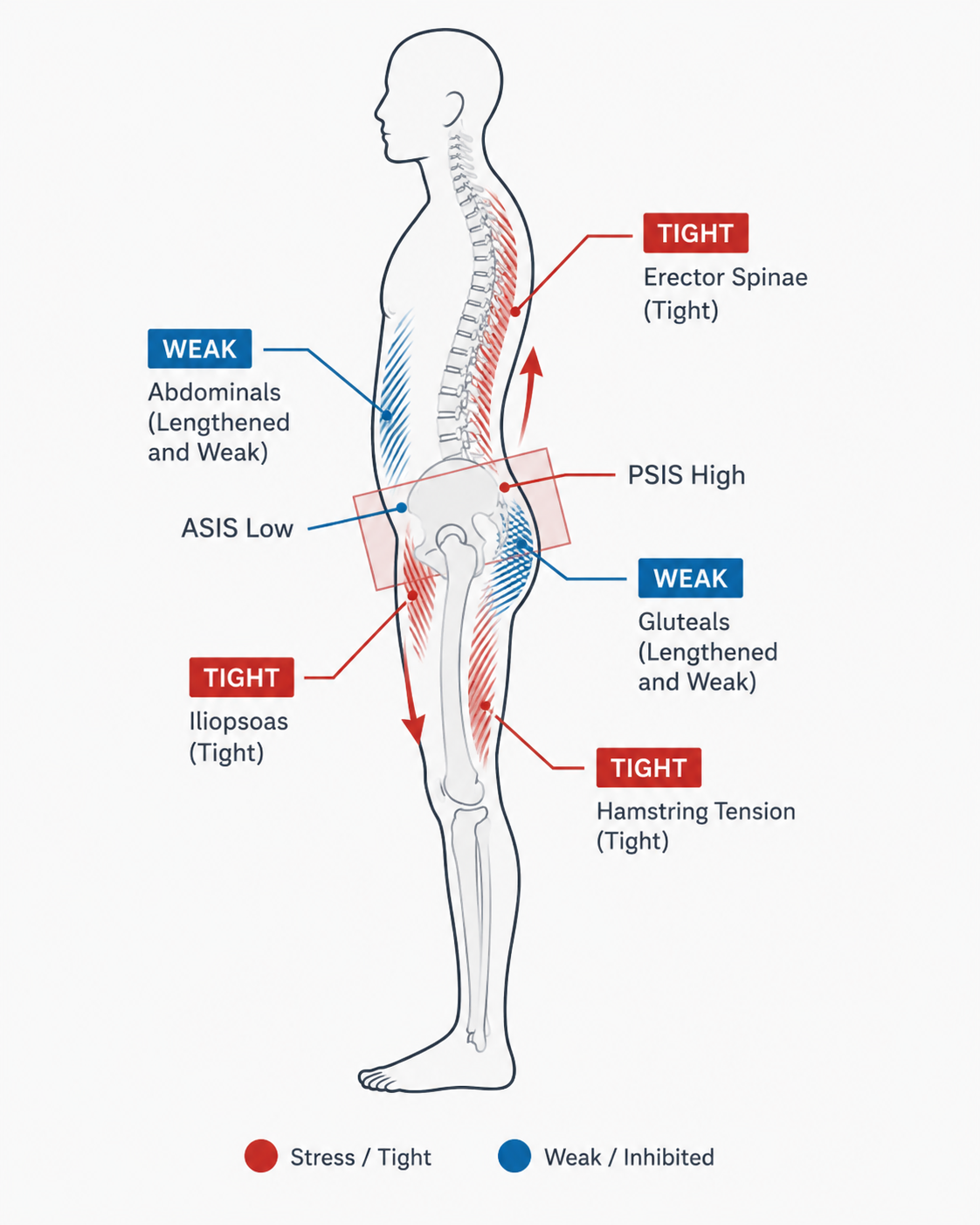
Lower Cross Syndrome
Lower Cross Syndrome develops when the muscles around the pelvis and lower back become imbalanced. Prolonged sitting, poor posture, weak core muscles, and reduced glute activation commonly contribute to this condition.
In Lower Cross Syndrome, the hip flexors and low back muscles become tight and overactive while the abdominal muscles and glutes weaken and fail to stabilize the pelvis properly. This often creates an anterior pelvic tilt, excessive low back arch, and poor movement mechanics.
These changes can place increased stress on the lumbar spine, SI joints, hips, and surrounding nerves. Common symptoms include chronic low back pain, hip tightness, muscle spasms, sciatica-like symptoms, poor balance, and discomfort with standing or walking for long periods.
Tight hip muscles and poor spinal mechanics may also irritate nerves such as the sciatic nerve and lumbar nerve roots, causing pain, numbness, or tingling into the legs.
Treatment focuses on improving posture, strengthening the core and glutes, restoring pelvic stability, and reducing stress on the lower back to improve movement and reduce pain.
Fix the cause. Feel the difference.
Reach out to get scheduled today!
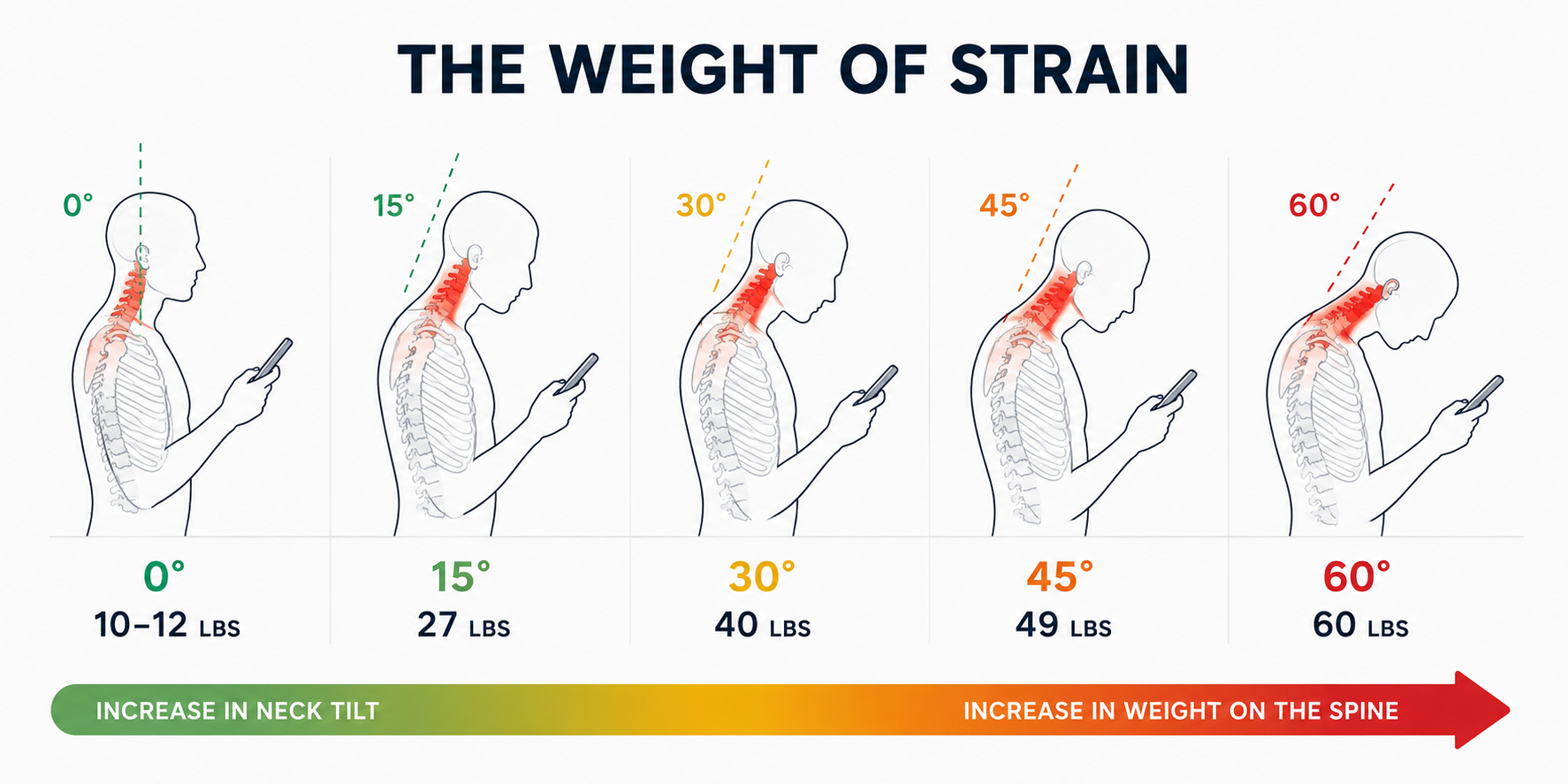
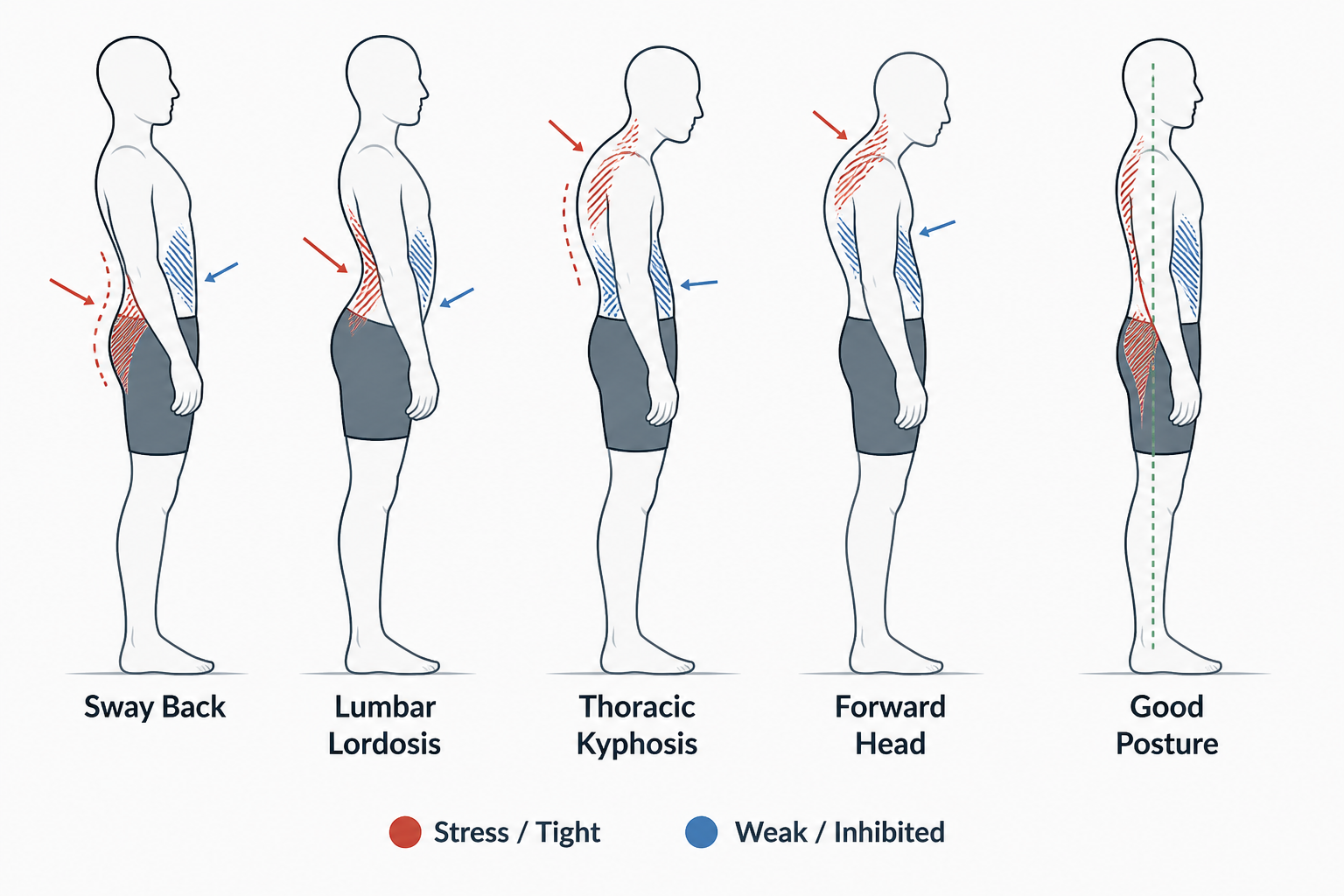
Forward Head Posture
Your head weighs about 10–12 pounds in a normal position, but as it moves forward, the stress placed on the neck increases dramatically. Even a small forward shift in posture can force the cervical spine to support the equivalent of 20–40+ pounds of pressure.
Over time, this excessive stress may contribute to Text Neck also known as loss of the normal cervical curve. As the neck straightens, abnormal pressure builds along the front of the vertebrae and discs, accelerating degeneration, disc wear, bone spur formation, muscle tension, headaches, and nerve irritation.
Common symptoms include neck stiffness, tension headaches, shoulder tightness, reduced mobility, and numbness or tingling into the arms and hands. Correcting posture and restoring proper spinal alignment can help reduce stress on the neck and improve long-term spinal health.
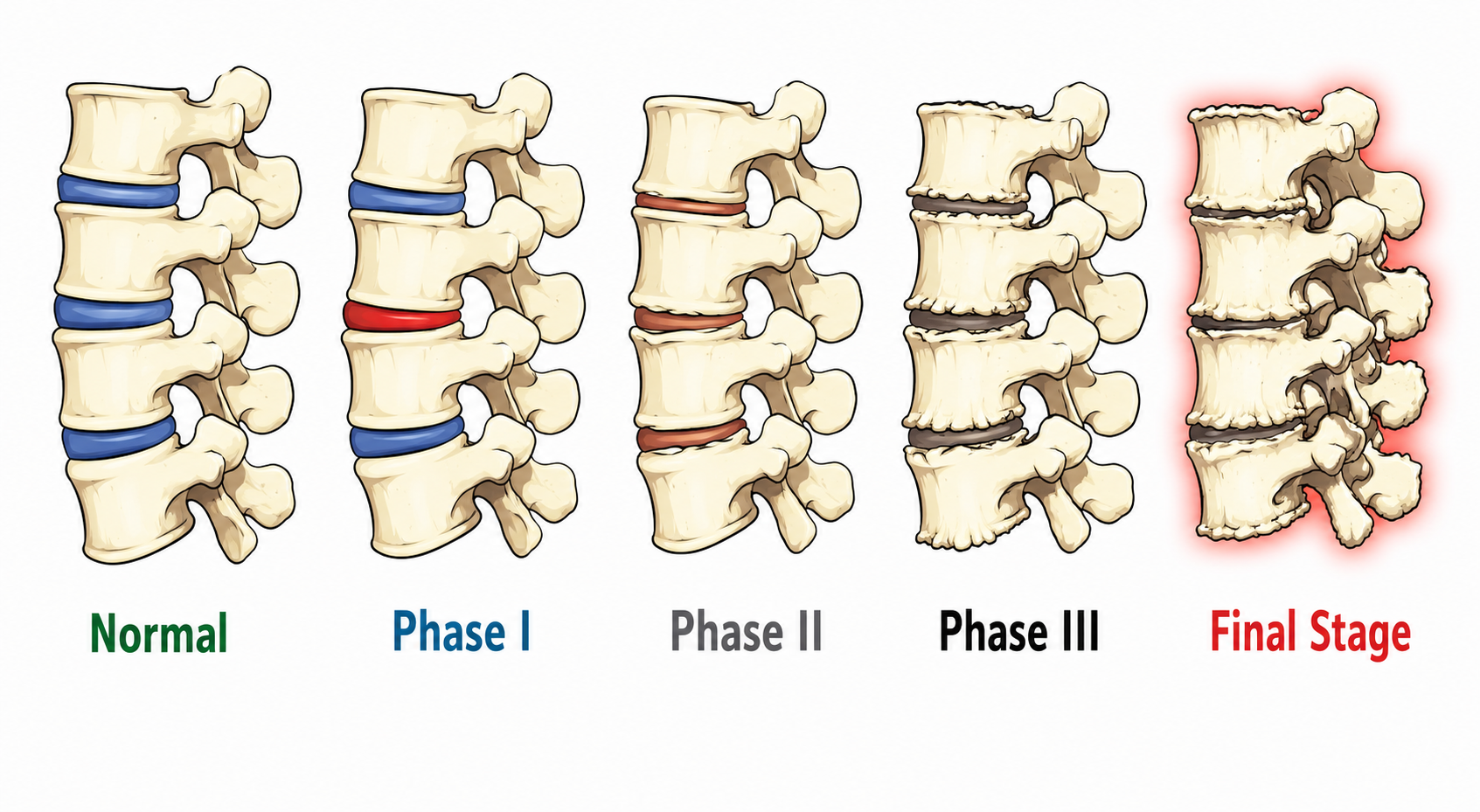
Spinal degeneration
Spinal degeneration is a gradual process that develops over time as the spine experiences chronic stress, poor posture, abnormal movement, injuries, and repetitive wear. Although aging naturally plays a role, degeneration is often accelerated by improper spinal mechanics and long-term postural strain.
In the early stages, the spine may begin losing its normal alignment and mobility. Poor posture, repetitive stress, prolonged sitting, forward head posture, previous injuries, and muscle imbalances can all create uneven pressure on the discs and joints. As the body attempts to compensate, muscles tighten to stabilize the area while certain joints become restricted and overloaded.
Over time, this abnormal stress may cause the spinal discs to lose hydration and elasticity. Disc spaces can begin narrowing, reducing the spine’s ability to absorb shock properly. This stage is often associated with stiffness, tension, reduced mobility, and intermittent pain.
As degeneration progresses, the body may begin forming bone spurs in an attempt to stabilize unstable segments of the spine. Ligaments may thicken, joints may become arthritic, and surrounding muscles often become chronically tight from prolonged compensation. Poor posture — especially forward head posture — can significantly accelerate this process by increasing the amount of force traveling through the spine.
The position of the head is particularly important in the cervical spine. In a neutral position, the head weighs approximately 10–12 pounds, but as the head moves forward, the stress placed on the neck increases dramatically. This excessive load creates increased compression on the discs, joints, and nerves in the neck while also altering mechanics throughout the entire spine.
In more advanced stages of degeneration, disc height loss, arthritis, bone spur formation, and spinal narrowing may begin irritating nearby nerves. This can contribute to chronic pain, numbness, tingling, weakness, headaches, reduced flexibility, and radiating symptoms into the arms or legs depending on the area involved.
Degeneration is often a slow and progressive process, but improving posture, restoring proper spinal motion, strengthening supporting muscles, and reducing abnormal stress on the spine can help slow progression and improve long-term spinal function.
Book an Appointment
If you're interested in working with us, complete the form with a few details about your project. We'll review your message and get back to you within 48 hours.